 Caroline Arbor
You will read soil test parameters including pH, cation exchange capacity, and primary macronutrients without confusion. You will apply only the specific organic amendments your plot requires, avoiding harmful fertilizer excesses.
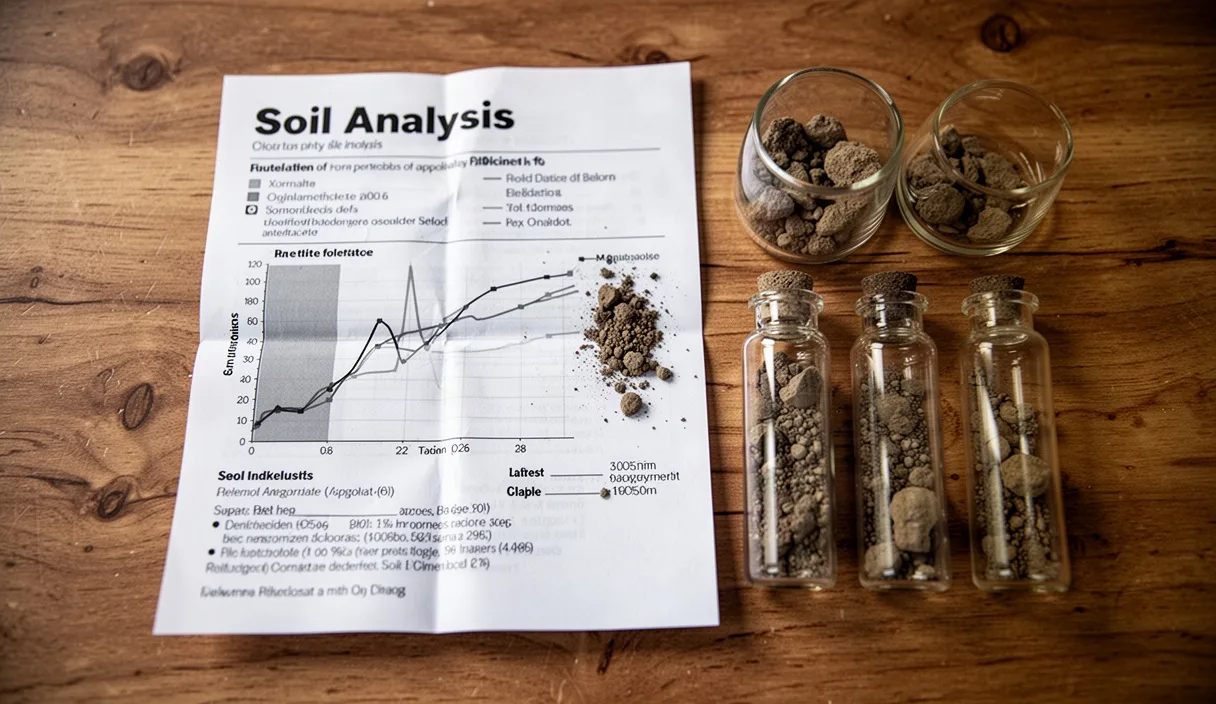
- Soil pH governs whether essential minerals remain accessible to plant roots.
- Cation exchange capacity reflects your soil's natural capacity to hold applied nutrients.
- Targeted mineral amendments prevent excessive phosphorus runoff and leaf scorch.
A flourishing kitchen garden relies on an accurate understanding of the earth beneath it. While observation of leaf color and plant vigor offers valuable clues, visual assessment cannot identify specific chemical deficiencies or mineral imbalances before they affect seasonal yields. Submitting garden soil to an accredited agricultural testing facility eliminates guesswork, replacing broad assumptions with verified chemical measurements.
A standard laboratory analysis evaluates several fundamental properties: soil reaction, buffer capacity, plant-available nutrients, cation exchange capacity, and organic matter content. For the dedicated grower, these figures provide a blueprint for seasonal soil stewardship. Interpreting these reports correctly allows one to apply amendments with precision, preventing both nutrient deficiencies and the environmental hazards associated with over-fertilization.
Gathering and Submitting a Representative Soil Sample
The reliability of any laboratory test depends entirely upon the quality of the sample submitted. Soil composition varies across short distances, even within a modest kitchen garden. A single trowel of soil taken from a single corner cannot represent an entire plot. A composite sample, formed by blending multiple small cores from across the designated growing space, provides the necessary average.
To collect a dependable sample, assemble a clean plastic bucket and a stainless steel soil probe or hand trowel. Avoid tools made of galvanized steel, brass, or rusty iron, as these metals contaminate trace mineral readings, particularly zinc and iron. Divide the garden into distinct management areas. If one section consists of native silt loam devoted to root vegetables while another consists of raised timber beds filled with blended compost, sample each section separately.
- Clear surface debris: Scrape aside surface mulch, fresh plant residues, and living weeds down to the mineral soil line.
- Extract vertical cores: Dig a narrow hole six to eight inches deep, which matches the primary root zone of annual vegetables. Take a uniform vertical slice of soil from the top to the bottom of the hole, maintaining an even thickness throughout.
- Repeat the extraction: Collect ten to fifteen separate subsamples across the targeted zone, moving in a deliberate zigzag pattern.
- Mix and dry: Combine the subsamples in the plastic bucket, mixing them thoroughly. Spread two cups of the blended soil onto clean butcher paper or a clean plastic tray to air-dry at room temperature. Never dry soil in an oven, as excessive heat alters microbial populations and distorts nitrate and sulfur readings.
- Package and document: Transfer the recommended volume, typically one pint, into the sample bag provided by the testing laboratory. Seal the container securely and write the bed identifier clearly on the exterior.
When completing the submission paperwork, indicate that the soil is intended for annual vegetable production. Laboratories maintain separate recommendation algorithms for turfgrass, orchards, and vegetable plots. Specifying your intention ensures that the interpretive guidance provided alongside the raw data matches the high nutrient demands of kitchen crops.
Deciphering Soil Reaction and Acid-Base Adjustments
Soil reaction, measured on the pH scale, governs the biological availability of all essential plant nutrients. The scale indicates the activity of hydrogen ions within the soil solution. Most kitchen vegetables, including brassicas, alliums, and nightshades, thrive within a pH range of 6.2 to 6.8. Within this narrow band, primary macronutrients dissolve freely without reaching toxic concentrations, and beneficial soil bacteria function with optimum metabolic efficiency.
Laboratory reports routinely present two distinct pH values: active soil pH (often reported as water pH) and buffer pH. Active pH measures the hydrogen ion concentration currently dissolved in the water surrounding soil particles. Buffer pH measures the reserve acidity held on the surfaces of clay and organic matter particles. While active pH indicates whether the soil is currently acidic or alkaline, the buffer pH indicates how stubbornly the soil resists a change in reaction. A heavy clay soil and a loose sandy soil might both present a water pH of 5.5, yet the clay soil will require three times as much agricultural limestone to reach 6.5 because its reserve acidity is substantially higher.
| Soil Measurement | Target Value | Primary Meaning | Corrective Approach |
|---|---|---|---|
| Water pH | 6.2 to 6.8 | Active acidity in current soil solution | Establishes whether intervention is necessary |
| Buffer pH | 6.6 to 7.0 | Reserve acidity stored on exchange sites | Determines the exact weight of liming agent needed |
| Acidic Soil (under 6.0) | Target 6.5 | Reduced availability of P, Ca, and Mg | Calcitic or dolomitic agricultural limestone |
| Alkaline Soil (over 7.3) | Target 6.8 | Reduced availability of Fe, Mn, and P | Elemental agricultural sulfur worked into the root zone |
When raising the pH of acidic ground, growers apply agricultural limestone. Calcitic limestone provides calcium carbonate, whereas dolomitic limestone provides both calcium carbonate and magnesium carbonate. Dolomitic lime is preferable only if the laboratory report reveals a concomitant deficiency in magnesium. For soils requiring acidification, elemental sulfur remains the standard remedy. Soil bacteria slowly oxidize elemental sulfur into sulfuric acid, an organic biological process that takes twelve to sixteen weeks of warm soil temperatures to complete. Adjustments should be calculated per one hundred square feet and applied in autumn to allow the chemical transitions to stabilize prior to spring planting.
Understanding Primary and Secondary Macronutrient Indices
Laboratory reports express nutrient levels as parts per million (ppm), pounds per acre, or as relative index values ranging from Below Optimum to Excessive. The extraction process uses mild chemical solutions, such as the Mehlich-3 or Bray-1 extractants, to pull from the soil the proportion of nutrients that root hairs can realistically absorb over the course of a single growing season.
Phosphorus (P) is notoriously immobile within the soil profile. Reports typically express plant-available phosphorus rather than total elemental phosphorus. In historic kitchen gardens that have received unmeasured compost over several decades, phosphorus indices frequently reach excessive categories, sometimes exceeding 150 ppm under Mehlich-3 extraction. When phosphorus reaches excessive levels, it binds chemically with zinc and iron, rendering those critical micronutrients insoluble and inducing chlorosis in leafy greens.
Potassium (K), calcium (Ca), and magnesium (Mg) exist within the soil as positively charged ions known as cations. Their retention in the soil is quantified through the Cation Exchange Capacity (CEC), expressed in milliequivalents per 100 grams of soil (meq/100g). A sandy soil often has a low CEC between 4 and 8, indicating limited nutrient storage, whereas a clay loam or highly organic soil displays a CEC between 15 and 30. The Base Saturation section of the report details the balance among these cations. In a well-managed vegetable garden, base saturation should roughly adhere to clear proportions:
- Calcium: 65 percent to 75 percent of total exchange sites
- Magnesium: 10 percent to 15 percent of total exchange sites
- Potassium: 3 percent to 5 percent of total exchange sites
- Hydrogen: Less than 10 percent of total exchange sites
If magnesium base saturation exceeds 20 percent, heavy clay soils can become tight and sticky, draining poorly and resisting cultivation. Conversely, if potassium saturation falls below 2 percent, fruiting vegetables such as tomatoes and winter squash struggle to transport sugars, resulting in blotchy ripening and poor shelf life.
Calculating Organic Nitrogen and Potassium Additions
Nitrogen presents a unique challenge in laboratory soil analysis. Because nitrate-nitrogen moves freely with rainfall and soil water, its concentration changes from week to week. Consequently, many standard laboratory reports do not test for nitrogen directly, or they report nitrate levels with the caveat that values are transient. Instead, laboratories supply a standard nitrogen recommendation based upon the known nutritional requirements of the intended crop, usually stated as pounds of actual nitrogen per one thousand square feet.
To fulfill these recommendations using organic amendments, one must convert the percentage listed on the amendment packaging into actual nutrient weight. Any commercial organic fertilizer displays its guaranteed analysis as three numbers representing the percentages of available nitrogen (N), available phosphate (P2O5), and soluble potash (K2O).
Consider a garden bed measuring four feet by twenty-five feet, which equals one hundred square feet. If the laboratory recommends applying three pounds of actual nitrogen per one thousand square feet for a heavy-feeding crop of sweet corn or brassicas, the one-hundred-square-foot bed requires one-tenth of that amount, or 0.3 pounds of actual nitrogen. If feather meal with an analysis of 12-0-0 serves as the nitrogen source, the required weight of the raw material is calculated by dividing the desired weight of actual nitrogen by the decimal percentage of nitrogen in the product:
0.3 pounds of actual N divided by 0.12 equals 2.5 pounds of feather meal.
A similar calculation applies to potassium deficiencies. If the report indicates a low potassium index and prescribes two pounds of potash (K2O) per one thousand square feet, our one-hundred-square-foot plot requires 0.2 pounds of actual K2O. Using sulfate of potash, which has an analysis of 0-0-50:
0.2 pounds of actual K2O divided by 0.50 equals 0.4 pounds of sulfate of potash.
Spreading these concentrated organic amendments evenly requires careful distribution. Mixing the calculated dose with damp sand or screened native soil expands the physical volume, allowing for uniform distribution across the entire bed before incorporating it lightly into the top three inches of soil.
Tracking Long-Term Soil Organic Matter Changes
Soil organic matter (SOM) represents the carbon-based residues of plants, animals, and microbial tissues at various stages of decomposition. The percentage of organic matter reported on a laboratory test reflects the biological life and structural resilience of the kitchen garden. Native mineral soils frequently contain between 1.5 percent and 3 percent organic matter. In a fertile kitchen garden, an organic matter reading between 5 percent and 8 percent indicates exceptional soil health, promoting stable crumb structure, efficient water infiltration, and robust microbial diversity.
Increasing this percentage requires patience and continuous biological input. Soil organisms decompose fresh residues rapidly, liberating carbon dioxide into the atmosphere and leaving only a small portion behind as stable humus. To increase the SOM reading of a six-inch soil layer by 1 percent across a one-thousand-square-foot space requires the addition of approximately one thousand pounds of fully finished, dry-weight organic matter. In practical terms, applying a half-inch layer of well-aerated compost across that space annually sustains the existing percentage while slowly building the stable fraction over several seasons.
It is entirely possible, however, to over-amend a small kitchen garden. Reports showing organic matter figures above 12 percent often accompany excessive levels of phosphorus, potassium, and soluble salts (electrical conductivity). High concentrations of soluble salts, indicated on reports by an electrical conductivity (EC) measurement exceeding 2.0 millimhos per centimeter (mmhos/cm), draw water away from tender seedling roots through osmotic pressure, causing leaf scorch and stunted growth. When organic matter reaches these upper limits, growers should suspend compost applications and rely instead on high-carbon, low-nutrient mulches, such as clean straw or untreated wood shavings, alongside deep-rooting cover crops to stabilize the biological system.
Common Mistakes to Avoid
- Sampling wet soil: Extracting soil when it is saturated destroys soil aggregates and prevents adequate mixing. Wait until the soil crumbles easily in the hand before sampling.
- Combining disparate garden areas: Mixing native soil from paths with enriched soil from raised vegetable beds into one sample bag produces an unhelpful average that fits neither area.
- Ignoring the buffer pH: Purchasing and spreading lime based solely on a low active pH without consulting the buffer pH value often leads to under-application on clay soils or over-application on sandy ground.
- Over-applying organic amendments: Assuming that natural materials cannot cause harm leads growers to apply unmeasured amounts of poultry manure or wood ash, rapidly pushing phosphorus and potassium into toxic ranges.
- Neglecting micronutrient balances: Applying high doses of single minerals without reviewing secondary elements can trigger competitive exclusion, such as excess potassium blocking plant uptake of magnesium.
Practical Next Steps
With an understanding of laboratory reports, you can establish an orderly management routine for your kitchen garden. First, select an accredited agricultural university testing facility or a certified regional soil laboratory, and obtain their specific sample bags and instructions. Take baseline samples in the autumn, allowing ample time for laboratory processing and deliberate planning during the winter months.
Upon receiving your soil test report, transcribe the key figures into a permanent garden record book. Document the date, sampling location, water pH, buffer pH, cation exchange capacity, and organic matter percentage. Calculate the precise quantities of amendments required for each specific bed, relying on individual nutrient sources rather than generic, pre-blended garden fertilizers that may supply elements your soil already possesses in abundance.
Execute adjustments according to a seasonal timeline. Apply agricultural limestone or elemental sulfur during late autumn or early spring, as these amendments require several months and active soil biology to alter the pH profile. Incorporate concentrated organic nitrogen and potassium sources two to three weeks before planting spring crops, ensuring nutrients are immediately available as young roots expand. Retest the soil every three years using the same laboratory and identical extraction methods, allowing you to trace changes over time and adjust your practices to maintain a balanced, productive garden.
This material serves educational purposes only; consult a local certified extension specialist or soil testing laboratory for site-specific agricultural decisions. Disclaimer

Further Reading
-
 Soil Management and Composting 9 min read
Building and Maintaining an Active Garden Compost Heap
You will balance carbon and nitrogen inputs to manage a tidy, productive compost pile that breaks down kitchen and garden trimmings cleanly. You will generate sweet-smelling, nutrient-dense humus for your beds within a single growing season.
-
 Soil Management and Composting 10 min read
Cover Crops for the Domestic Raised Bed
You will incorporate autumn and spring cover crops to protect bare raised bed soil from erosion, compaction, and nutrient leaching. You will utilize green manures to fix atmospheric nitrogen and enrich bed tilth naturally.