 Caroline Arbor
You will shield the root systems of dwarfing apple, pear, and fig trees grown in outdoor planters from severe freezing cycles. You will navigate winter dormancy successfully without premature spring bud break.
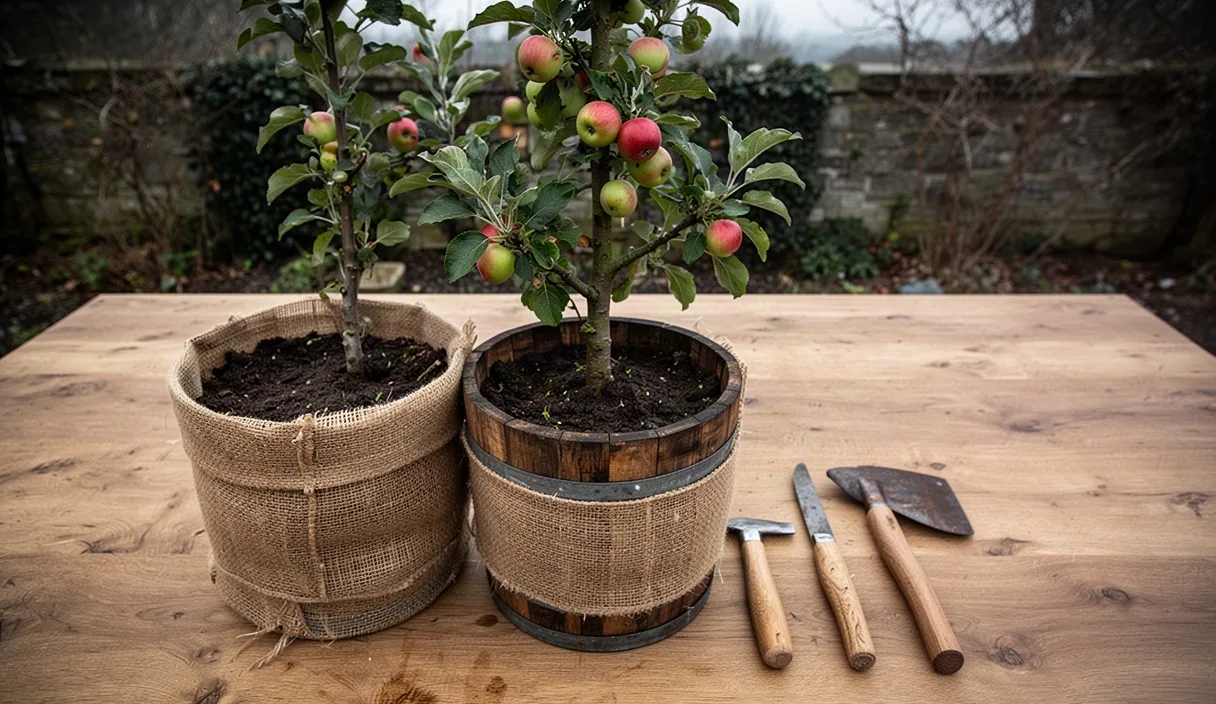
- Uninsulated container root balls freeze several degrees colder than garden soil profiles.
- Wrapping outer pot perimeters with natural burlap and straw insulates critical root zones.
- Potted fruit trees need occasional winter hydration during prolonged non-freezing thaws.
The cultivation of fruit trees in containers has permitted many orchardists and domestic gardeners to harvest stone fruits, pome fruits, and figs from compact terraces and courtyards. Varieties grafted onto dwarfing rootstocks such as M9 for apples, Quince C for pears, or Gisela 5 for sweet cherries adapt admirably to life in large vessels. Yet the very characteristic that makes container culture possible, namely the isolation of the root volume within a discrete pot, presents a distinct physiological hazard as autumn yields to severe cold.
When planted directly in the garden earth, a tree enjoys the vast thermal mass of the surrounding subsoil, which rarely drops below the freezing mark even under sustained snow cover. In an above-ground planter, however, the root zone is separated from freezing ambient air by only a thin wall of terracotta, glazed ceramic, or plastic. Preserving potted fruit trees throughout the winter requires conscious management of soil moisture, solar exposure, and perimeter insulation, ensuring that the dormant root system remains intact until spring sap flow commences.
Vulnerability of Containerized Root Systems to Hard Frost
Deciduous fruit trees develop remarkable cold tolerance in their aerial canopies. Fully dormant branches of standard apple cultivars can endure temperatures dropping to minus twenty-five degrees Fahrenheit without suffering vascular death. The root systems of those identical trees, however, possess no such genetic resilience. Root tissue does not undergo the same gradual dehydration and physiological hardening that shields exterior stems. In most temperate fruit species, fine feeder roots sustain cellular rupture and die when the root ball temperature descends past twenty-three degrees Fahrenheit, while structural roots perish if temperatures reach fifteen degrees Fahrenheit.
In an unprotected pot, the potting substrate equilibrates rapidly with the surrounding air. A sharp frost accompanied by brisk wind can depress the internal temperature of an uninsulated container to match the external air within six to eight hours. When the potting soil freezes solid, two destructive mechanisms occur simultaneously: the physical expansion of ice crushes delicate root hairs, and the complete freezing of available water induces physiological drought. Because the roots cannot draw moisture while frozen, winter winds desiccate the exposed buds and branch tips above.
The susceptibility of a potted tree is also dictated by the material of the container itself. Porous materials like unglazed terracotta absorb moisture, which expands upon freezing and fractures the vessel, exposing the root mass to immediate air exposure. Dense wood, thick-walled composite resin, and double-walled polyurethane offer superior baseline resistance against rapid thermal swings, though none provide sufficient insulation on their own during prolonged sub-freezing spells.
| Fruit Species | Canopy Hardiness Threshold | Root Zone Danger Threshold | Common Dwarfing Rootstock |
|---|---|---|---|
| Apple | -25 degrees Fahrenheit | 18 degrees Fahrenheit | M9, Budagovsky 9 |
| Pear | -20 degrees Fahrenheit | 20 degrees Fahrenheit | Quince A, Quince C |
| Sweet Cherry | -15 degrees Fahrenheit | 22 degrees Fahrenheit | Gisela 5, Krymsk 5 |
| Peach / Nectarine | -10 degrees Fahrenheit | 24 degrees Fahrenheit | St. Julien A, Krymsk 1 |
| Common Fig | 10 degrees Fahrenheit | 26 degrees Fahrenheit | Own roots |
Insulating Pots Using Coarse Mulch and Natural Wrappings
The objective of exterior pot insulation is not to generate warmth, for a dormant root mass generates no measurable metabolic heat. The goal is rather to slow thermal exchange, preventing the rapid freeze-and-thaw cycles that shatter root cells and heave the soil. To achieve adequate protection, gardeners should create a buffer zone around the container that emulates the continuous mass of the earth.
Natural, permeable materials are preferable to impermeable synthetic sheeting. When moisture becomes trapped against the exterior of a pot under airtight plastic, fungal rots flourish, and terracotta vessels suffer accelerated surface spalling. Heavyweight woven burlap, clean wheat straw, dried pine needles, wood shavings, and untreated sheep wool batts allow normal vapor exchange while impeding ambient chill.
To insulate a container correctly, proceed with the following systematic method before the arrival of the first hard freeze:
- Topdress the potting soil: Apply a layer of coarse pine bark or clean wheat straw across the soil surface, maintaining a depth of three to four inches. Leave an open collar of one inch around the main trunk to deter bark gnawing by small rodents and to prevent moisture rot at the root flare.
- Wrap the container perimeter: Encircle the pot with a cylinder of wire fencing or heavy hardware cloth, anchored approximately four to six inches beyond the pot rim on all sides.
- Pack the insulating chamber: Firmly stuff the space between the container exterior and the wire perimeter with dry straw, packed leaves, or wood shavings, ensuring no voids remain along the sides.
- Cover with burlap: Wrap the exterior of the wire cylinder with two layers of heavy horticultural burlap, securing the material firmly with natural jute twine.
- Elevate the base: Rest the base of the container on wooden laths or ceramic pot feet rather than directly on freezing stone flags or wet soil. This preserves basal drainage channels and prevents the pot bottom from fusing to the patio surface.
Locating the Optimal Overwintering Microclimate Outdoors
Positioning on the patio dictates whether a potted fruit tree remains safely dormant or wakes precociously during an unseasonable warm spell. Southern exposures directly beside home masonry often appear attractive for their warmth, yet they represent a significant hazard for deciduous trees. Sunlight striking dark pots on a clear February afternoon can elevate soil temperatures by fifteen to twenty degrees above ambient levels, stimulating sap flow and breaking bud dormancy prematurely. If a severe frost returns the following night, the activated vascular cambium freezes and splits, frequently killing the tree.
The superior outdoor microclimate is found along a sheltered north-facing or east-facing wall, or beneath the protected eaves of an unheated outbuilding. These northern orientations maintain consistent, cool temperatures, preventing artificial midday warming. Concurrently, an exterior wall blocks the prevailing northwesterly winter winds that rapidly desiccate branches and sap container heat.
Grouping potted specimens together yields significant microclimatic advantages. When six or eight containers are clustered tightly against one another, their collective mass shields the interior vessels from wind. Place the most frost-sensitive species, such as figs and peaches, at the center of the grouping, positioning hardier apples and pears along the exposed perimeter. The entire grouping may then be surrounded by a communal barricade of straw bales or insulated board to stabilize conditions for the community of trees.
Hydration Needs of Deciduous Fruit Trees in Dormancy
It is a frequent misunderstanding that a tree shedding its leaves ceases to require water. While water consumption drops dramatically once foliage falls, the root system remains biologically alive, and respiratory moisture loss continues through the dormant buds and lenticels along the branches. Cold, dry winter air acts as a natural desiccant. If the root ball dries completely, the tree will suffer irreversible dieback before spring arrives, a condition often misattributed to low temperatures when the true culprit was dehydration.
Careful attention must be paid to irrigation schedules between November and March. Outdoor pots sheltered beneath overhanging roofs or clustered beneath tarps receive no natural rainfall. The grower must inspect the soil moisture manually every two to three weeks. Insert a wooden dowel or a finger three inches into the potting medium. If the mix feels dry and powdery to the touch, application of water is required.
Watering should take place strictly during morning hours on days when ambient temperatures are safely above freezing, ideally forty degrees Fahrenheit or warmer. Apply water slowly until moisture just begins to weep from the drainage apertures at the base. This timing guarantees that the liquid percolates throughout the root zone and drains freely before evening temperatures dip below the freezing threshold. Stagnant, waterlogged soil must be avoided at all costs; saturated substrate that freezes into a solid block deprives roots of oxygen and expands violently, causing severe mechanical shearing of the root network.
Spring Unwrapping Timelines Based on Local Bud Swell
Determining the appropriate date to remove protective winter wrapping requires observation of plant phenology rather than reliance upon a calendar date. Regional spring conditions fluctuate widely from year to year, and premature unwrapping leaves vulnerable roots exposed to late-season arctic blasts, while tardy unwrapping can blanch developing foliage and encourage damp mold growth around the root crown.
The primary botanical indicator is bud swell, specifically the silver tip stage in apples and the green cluster or pink bud stage in stone fruits. When terminal buds visibly swell and the outer bud scales begin to separate, root metabolic activity has resumed in earnest. At this junction, the protective mulch and perimeter insulation must be systematically reduced over a period of seven to ten days.
Begin by stripping away the exterior burlap and clearing the packed straw or pine needles from around the sides of the pot. Leave the topsoil mulch in place for another two weeks to moderate early-spring temperature swings. Once all exterior packings are removed, wash the pot surfaces with clean water to remove debris that could harbor overwintered insect eggs or fungal spores. If severe overnight freezes threaten after buds have burst, drape temporary lightweight fleece over the branches for the duration of the cold night, anchoring it to the container rim, and remove it promptly the following morning.
Common Mistakes in Winter Pot Care
Experienced growers recognize that several intuitive horticultural actions can inadvertently cause grave injury to potted fruit trees during winter. The following practices should be scrupulously avoided:
- Overwatering saturated pots: Pouring excessive water into cold, dormant potting media that lacks active foliage leads quickly to root rot, known as Phytophthora, because the tree cannot transpire the excess fluid.
- Retaining drainage saucers: Leaving catchment saucers beneath outdoor pots in winter traps water around the base. As that water freezes, it blocks the drainage holes and creates an impenetrable ice sheet across the root bottom.
- Overwintering inside heated residences: Bringing deciduous trees into living areas with central heating prevents them from accumulating required winter chilling hours and forces weak, etiolated growth that collapses under indoor light levels.
- Applying nitrogenous fertilizers: Feeding trees with soluble fertilizers between September and early spring stimulates tender new shoots that cannot lignify in time, ensuring severe frost damage.
- Neglecting container stabilization: High winter gales easily overturn top-heavy potted trees, smashing ceramic containers and fracturing the graft union between rootstock and scion.
Practical Next Steps for the Winter Orchardist
Preparation should begin in late autumn as soon as the trees exhibit natural leaf fall. First, inspect all pots for structural soundness, ensuring drainage ports remain unobstructed by soil sediment or rooting mats. Where rootbound conditions are evident, defer repotting or root pruning until early spring, as disturbing root mass immediately prior to dormancy increases vulnerability to frost damage.
Second, inventory your winterizing supplies before sustained cold settles across the region. Procure dry straw, rolls of heavy burlap, durable twine, and wooden risers. Group your patio specimens according to hardiness and finalize their overwintering positions against sheltered walls. Should unusual regional conditions or severe disease infestations appear on your stock, consulting a local university agricultural extension agent or a certified nursery professional will provide specialized, localized guidance suited to your district.
This material serves educational purposes only; consult a local certified extension specialist or soil testing laboratory for site-specific agricultural decisions. Disclaimer

Further Reading
-
 Orchard and Berry Cultivation 9 min read
Formative Pruning for Young Bush and Cane Berries
You will distinguish between primocanes and floricanes across raspberries and blackberries to carry out confident early spring cuts. You will establish open, airy bushes that resist fungal mildew and produce accessible summer fruit.