 Caroline Arbor
You will design a multi-tiered balcony growing station capable of producing reliable yields of cut-and-come-again greens through three seasons. You will maintain soil moisture and avoid early bolting during warmer weather periods.
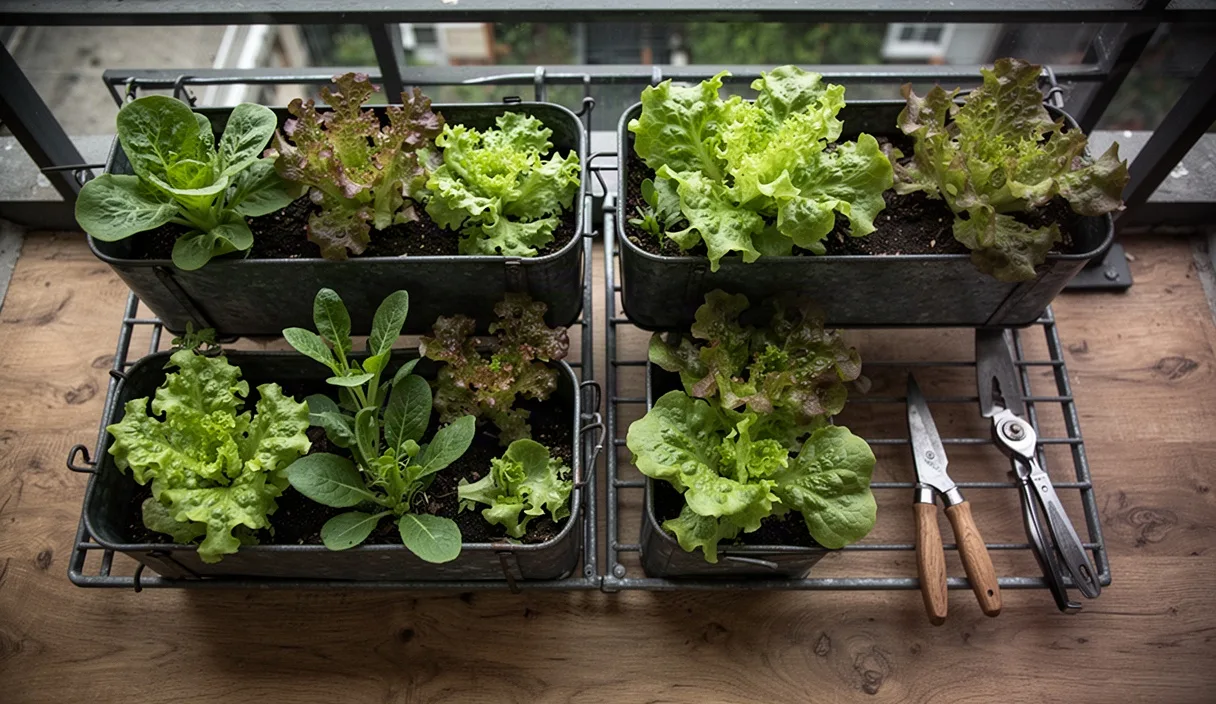
- Shallow rectangular window planters optimize vertical tier spacing on modest balconies.
- Succession planting every twelve days ensures a continuous supply of fresh tender leaves.
- Light fabric shading delays bitterness and floral initiation during peak afternoon sun.
A private balcony offers a remarkably controlled environment for the cultivation of salad greens, provided one approaches the vertical space with structural discipline. When soil volume is restricted to tiered shelving, the ambient conditions differ markedly from an open garden plot. Masonry walls absorb radiation, winds accelerate past balustrades, and root systems must thrive in a fraction of their customary soil depths. Yet, with thoughtful design and disciplined maintenance, a set of modest shelving units can yield crisp, nutrient-dense leaves throughout much of the year.
The pursuit of homegrown salad requires neither acres of open land nor intricate mechanical systems. It asks only for an understanding of plant biology under container conditions, a reliable watering cadence, and careful cultivar selection. The following guide provides the practical dimensions, planting cadences, and environmental controls necessary to maintain a productive vertical salad garden on an urban or suburban terrace.
Selecting Planters and Tiered Balcony Infrastructure
Before purchasing hardware, one must ascertain the structural load limit of the balcony. Saturated potting compost weighs between 1.2 and 1.6 kilograms per liter, depending on the mineral component. A three-tier rack supporting six rectangular troughs, each holding 18 liters of growing media, easily reaches a static weight of 150 kilograms once watered. For older residential buildings or cantilevered concrete decks, consult the architectural guidelines or an engineer before concentrating substantial loads along an outer balustrade. Shelving units should be secured directly against the structural building wall whenever permissible, using corrosion-resistant masonry anchors or non-invasive tension braces.
Powder-coated carbon steel, hot-dipped galvanized wire, and exterior-grade cedar represent the most enduring frame materials. Untreated pine and lightweight plastic will deteriorate under ultraviolet radiation within two seasons. Shelves should feature wire grid platforms or slatted boards rather than solid sheets, ensuring that air circulates freely around root basins and that excess water drains through. Keep a vertical clearance of at least 38 centimeters between shelves. This clearance permits light penetration to lower trays while allowing growers room to water and snip leaves comfortably.
Planter troughs demand equal scrutiny. Shallow, rectangular boxes with a depth of 15 to 18 centimeters and a width of 20 centimeters prove optimal for loose-leaf lettuces and small brassicas. Deeper troughs merely add excessive wet weight without delivering any root advantage to shallow-rooting greens. Every container must possess ample drainage holes across its base. Because runoff can damage building facades or inconvenience neighbors on lower balconies, position continuous, high-sided drip trays under each shelf level, or fit the base of the lowest tier with an internal reservoir tray that can be drained manually into a watering can.
Leafy Cultivars Suited to Confined Root Volumes
Not every salad green behaves gracefully in restricted soil. Deep-rooting heading lettuces, such as conventional Iceberg or large Batavian varieties, frequently produce loose, bitter foliage when their roots encounter rigid container walls. Conversely, small-framed heading types, compact cut-and-come-again cultivars, and fast-growing Asian greens thrive within shallow substrates, provided their water intake remains uninterrupted.
Loose-leaf lettuces are the most forgiving for balcony shelves. Cultivars such as Black Seeded Simpson, Red Salad Bowl, and Lollo Rossa develop expansive foliage from miniature root crowns. For those who prefer a firmer rib and notable crispness, Little Gem provides the sweet, dense heart of a romaine while demanding a planting footprint of only 15 centimeters. Tom Thumb, an heirloom butterhead, matures into a palm-sized head that fits neatly in a 12-centimeter container, making it ideal for the top tiers where sunlight is most direct.
Asian brassicas offer cold tolerance and rapid renewal after cutting. Tatsoi forms flat, spoon-shaped rosettes that resist low temperatures, while Green Mizuna provides deeply serrated leaves with a delicate, peppery profile. Wild Italian arugula (Diplotaxis tenuifolia) and garden cress can be interplanted along trough margins to fill void spaces and provide diverse textures in the salad bowl.
| Cultivar | Minimum Root Depth | Days to First Harvest | Leaf Profile and Growth Habit |
|---|---|---|---|
| Little Gem Romaine | 16 cm | 48-52 days | Compact upright heads, crisp ribs, mildly sweet |
| Tom Thumb Butterhead | 12 cm | 40-45 days | Miniature heads, delicate velvety texture |
| Red Salad Bowl | 14 cm | 32-38 days | Open rosette, burgundy serrated leaves, non-heading |
| Green Mizuna | 12 cm | 25-30 days | Feathery upright spray, mildly piquant, rapid re-growth |
| Tatsoi Rosette | 12 cm | 35-40 days | Dark green spoon leaves, crisp succulent stalks |
Succession Schedules for Consistent Weekly Cuttings
The most common failing in domestic salad production is the simultaneous maturation of all plants, followed by weeks of bare containers. A structured succession routine prevents this boom-and-bust cycle. Rather than sowing an entire three-shelf system in an afternoon, divide your planters into distinct planting cohorts that yield fresh harvests across the growing season.
Establish a rotation using separate nursery trays and production planters:
- Initial Nursery Sowing: Sow three seeds per cell in a 24-cell plug tray using a fine, sterile seed-starting mix. Keep the tray on an indoor windowsill or a shaded middle balcony shelf until germination occurs.
- Thinning: At the emergence of the first true leaves, usually 8 to 11 days after sowing, thin each cell to a single vigorous seedling using precision snips rather than pulling roots.
- Transplanting: Move seedlings into balcony troughs at three weeks of age, spacing them 12 to 15 centimeters apart.
- Succession Interval: Sow a new 24-cell plug tray every 12 to 14 days. By the time the prior batch reaches harvestable maturity, the subsequent cohort stands ready to claim vacant trough space.
When harvesting loose-leaf cultivars, apply the cut-and-come-again technique. Remove only the outermost four or five leaves from each plant, cutting with clean shears roughly 2.5 centimeters above the crown. The central growing point remains intact, generating fresh foliage for three to four consecutive weeks. Once a plant exhibits signs of central stem elongation (bolting), sever it entirely at the soil line, work a handful of worm castings into the surrounding soil, and set out a fresh plug from your nursery flat.
Watering Regimes for Wind-Exposed Container Displays
Balconies act as microclimate wind tunnels. Moving air accelerates transpiration from leaf surfaces and strips moisture from potting soil far more swiftly than in a protected ground-level border. On upper floors, containers can shift from field capacity to severe drought stress within ten hours of daylight, leaving leaves tough and bitter.
Avoid overhead sprinkling with a coarse rose. Wet foliage exposed to persistent wind readily suffers edge burn, and droplets left standing on densely clustered leaves encourage fungal pathogens such as downy mildew. Instead, deliver water directly to the soil surface using a long-necked indoor can, or install an automated micro-irrigation system consisting of 6-millimeter feed lines and pressure-compensating drippers delivering 2 liters per hour. These drippers must run for 8 to 14 minutes early in the morning, ensuring that root systems replenish their moisture reserves before midday wind speeds rise.
To establish whether moisture is required, disregard the look of the dry crust on top. Insert a finger 3 centimeters into the compost. If the mix feels cool and particles cling to the skin, postpone watering. If it feels warm, dry, and gritty, water immediately. In high-wind locations, the addition of a 2-centimeter layer of finely shredded straw or pine-bark fines over the trough surface will noticeably lower evaporation rates and stabilize root temperatures.
Managing Heat Accumulation on South-Facing Terraces
A south-facing orientation offers superb light during the short days of spring and autumn, but summer creates extreme conditions for leafy greens. Salad crops prefer root temperatures between 14 and 18 degrees Celsius; when soil temperatures exceed 24 degrees, roots signal the plant to bolt, producing bitter milky latex, fibrous stems, and unwanted flower stalks.
Concrete balcony slabs and brick facades act as thermal batteries, absorbing heat through the afternoon and radiating it back toward containers through the night. To interrupt this heat transfer, create an air buffer. Elevate troughs off metal shelf racks using 2-centimeter wooden cleats, and pull the shelving unit 8 to 10 centimeters away from the masonry wall to encourage convection currents. Avoid dark plastic containers, which absorb thermal energy; choose light grey, cream, or terracotta-hued vessels that reflect sunlight.
During the hottest months, deploy a 35-percent density knitted shade cloth above the top shelf. Secure the cloth with eyelets and heavy cord so that it does not flap against delicate foliage. This moderate screening diffuses harsh midday rays, lowers leaf surface temperatures by 3 to 5 degrees Celsius, and preserves the tender, succulent texture expected of homegrown greens.
Common Mistakes to Avoid
Gardeners working on balconies frequently stumble on recurring errors that reduce yield and introduce unnecessary frustration. Attending to these details preserves crop vigor throughout the calendar:
- Overcrowding Seedlings: Sowing broadcast-style directly into troughs results in tangled root masses and spindly, light-starved foliage. Respect mature plant dimensions and thin ruthlessly.
- Neglecting Drainage Trays: Allowing drainage water to cascade onto lower levels invites leaf spotting, stains exterior walls, and damages tenant relations below. Equip every shelf tier with a collection basin.
- Relying on Garden Soil: Digging up topsoil from ground gardens brings heavy clay, weed seeds, and soil-borne pathogens into small containers. Use only professional soilless compost based on peat or coconut coir, enriched with perlite and composted bark.
- Ignoring Wind Load: Light wire racks placed against a solid perimeter railing can topple during sudden gusts. Anchor the shelving frame securely to solid architecture or weigh down the lowest shelf with heavy ceramic ballast.
- Over-Fertilizing with Nitrogen: Excessive chemical nitrogen produces soft, sappy growth that attracts aphids and collapses under wind. Apply half-strength organic seaweed extracts or fish hydrolysate no more than once every 14 days.
Practical Next Steps for the Coming Season
Success begins with orderly preparation well ahead of planting day. Review the seasonal calendar below to organize your balcony space methodically:
- Measure and Inspect: Measure your balcony footprint and sun exposure patterns across five distinct hours of the day. If structural details are unclear, consult building management regarding maximum permissible balcony weight.
- Procure Hardware: Select a durable slatted or wire rack, compatible drainage trays, and troughs measuring 15 to 18 centimeters deep. Wash all second-hand containers in hot, soapy water before use.
- Blend Growing Substrate: Prepare a potting blend composed of three parts quality potting compost, one part coarse perlite, and a modest handful of balanced organic slow-release fertilizer per 10 liters of mix.
- Commence Plug Sowing: Begin the initial succession in plug trays indoors or in a sheltered balcony nook roughly three weeks before you intend to fill the main troughs.
- Secure and Align: Anchor the rack securely, install any wind baffles or shade cloths, and verify that all lower drip pans drain cleanly without overflow.
With your infrastructure sound and seedlings sprouting on schedule, your balcony shelves will produce crisp, clean harvests week after week, transforming a few vertical meters into a reliable urban larder.
This material serves educational purposes only; consult a local certified extension specialist or soil testing laboratory for site-specific agricultural decisions. Disclaimer

Further Reading
-
 Kitchen Greens and Balcony Culture 11 min read
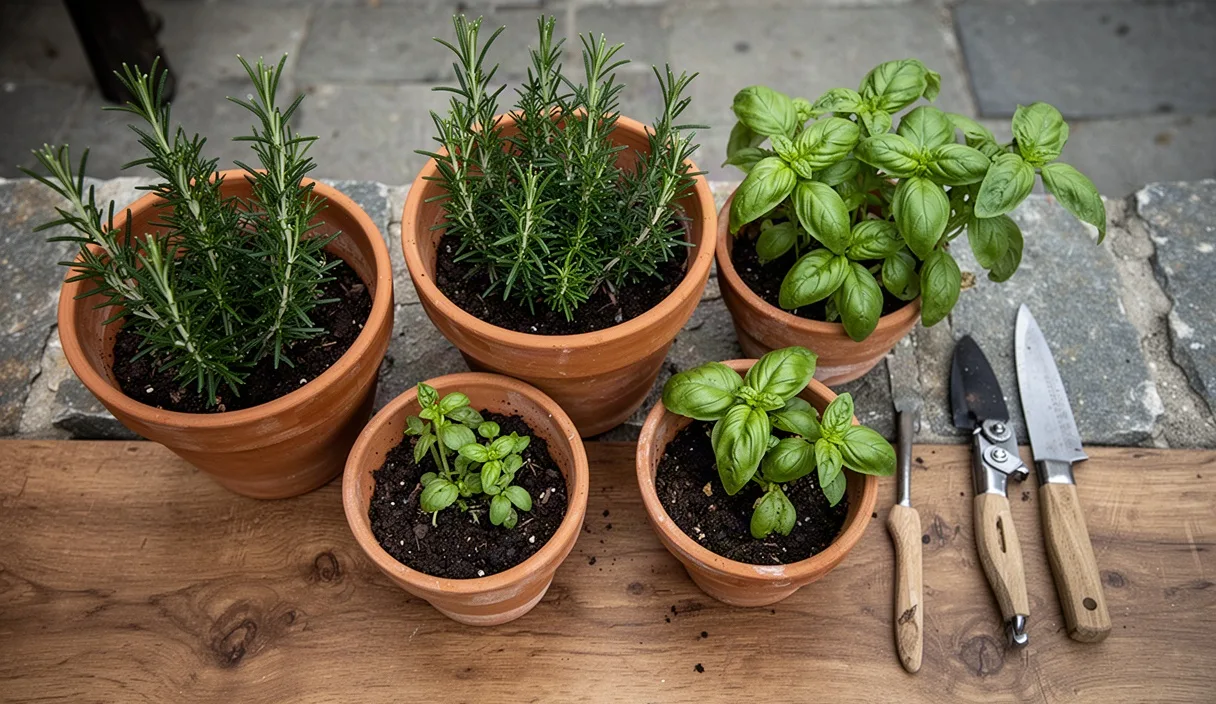
Culinary Herbs in Containers: Pot Size and Soil Moisture
You will discern the individual water and volume requirements of Mediterranean woody herbs compared to lush annual culinary species. You will assemble companion pots that keep rosemary, thyme, and basil equally vigorous on a single sill.